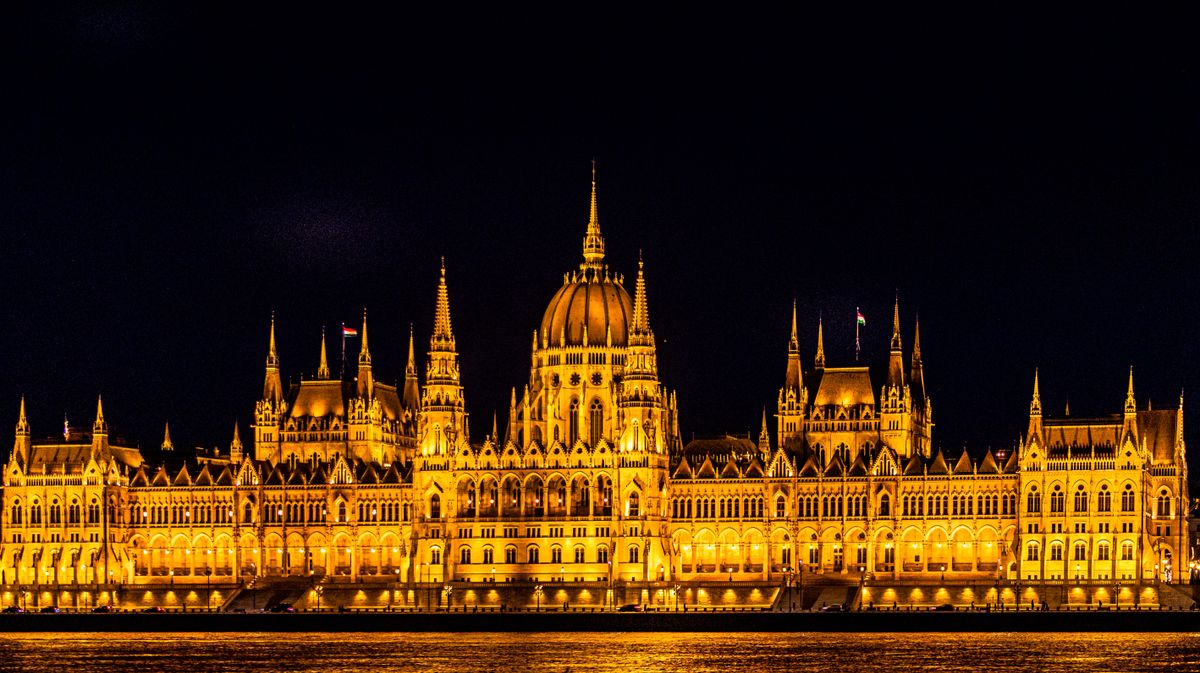
Budapest is really two cities that agreed to share a river. On the west bank, hilly Buda is crowned by a castle; on the east, flat and lively Pest holds the Parliament and most of the places you will want to eat. A string of bridges and a handful of trams stitch the two halves together, which makes the city surprisingly easy to explore at a gentle pace.
It is also one of Europe’s best-value capitals, and many of its finest views are free. Here is how to enjoy it with kids, grandparents or both.
First, a Quick Word on Money
Hungary does not use the euro. Prices are in Hungarian forints (HUF or Ft), and in 2026 one euro buys roughly 360–368 forints. A simple rule of thumb: drop the last two zeros and divide by four, and you are close to the price in euros (so 2,000 HUF is about €5.50). Cards are accepted almost everywhere; when the terminal asks, pay in forints for a better rate. Euro figures below are rounded.
What to See
The Parliament and the Danube Promenade
The Hungarian Parliament is the building on every postcard, and walking around it on Kossuth Square costs nothing. To see the gilded interior, the guided tour lasts about 45 minutes and costs around 8,500 HUF (about €23) for non-EU adults and about 3,500 HUF (about €9.50) for EU citizens with ID. Children under six go free. Book online on the official Parliament website ahead of time, especially in summer, and allow an extra 20–30 minutes for security.
Afterwards, stroll south along the river. A few minutes away is the Shoes on the Danube Bank, a quiet memorial to the people killed on this embankment during the Second World War, and a moving stop with older children.
Castle Hill and Fisherman’s Bastion
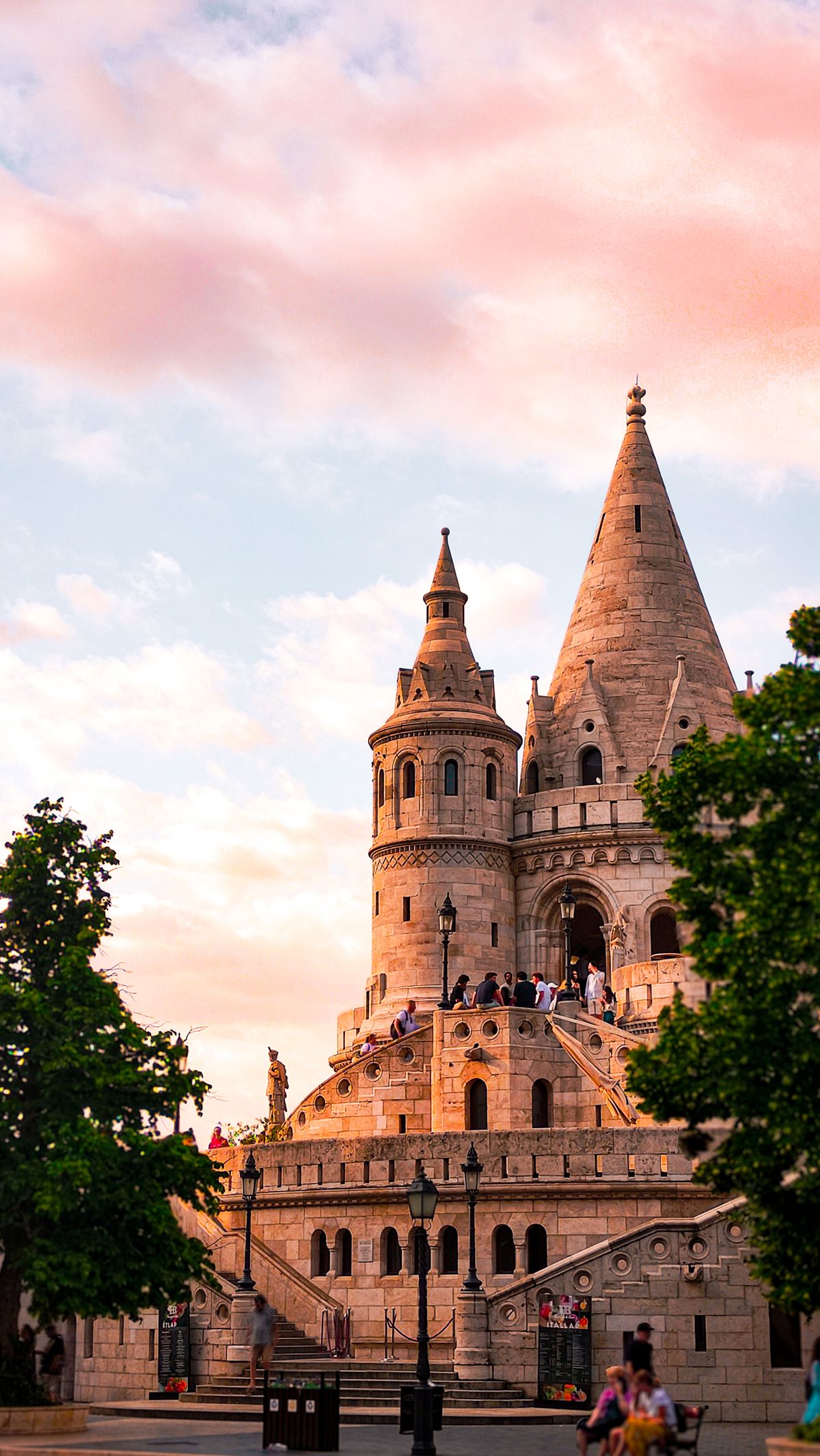
Across the river, Fisherman’s Bastion looks straight out of a storybook, its white turrets overlooking Parliament. The lower terraces, arcades and stairways are free and open around the clock. Only the upper viewing terrace charges during the day (1,700 HUF, about €4.70; 850 HUF for under-14s, students and over-65s, card only). From October to May it is paid from 9:00 to 19:00, so an early-morning or evening visit is free.
Right next door, the colorful roof of Matthias Church is worth a look inside (3,400 HUF adults, 2,700 HUF concessions, or 9,500 HUF for a family of two adults and up to six children). To get up the hill, skip the historic funicular (4,500 HUF one way) and take bus 16 from Deák Ferenc tér, which stops two minutes from the Bastion for a standard 500 HUF ticket.
City Park and the Széchenyi Baths
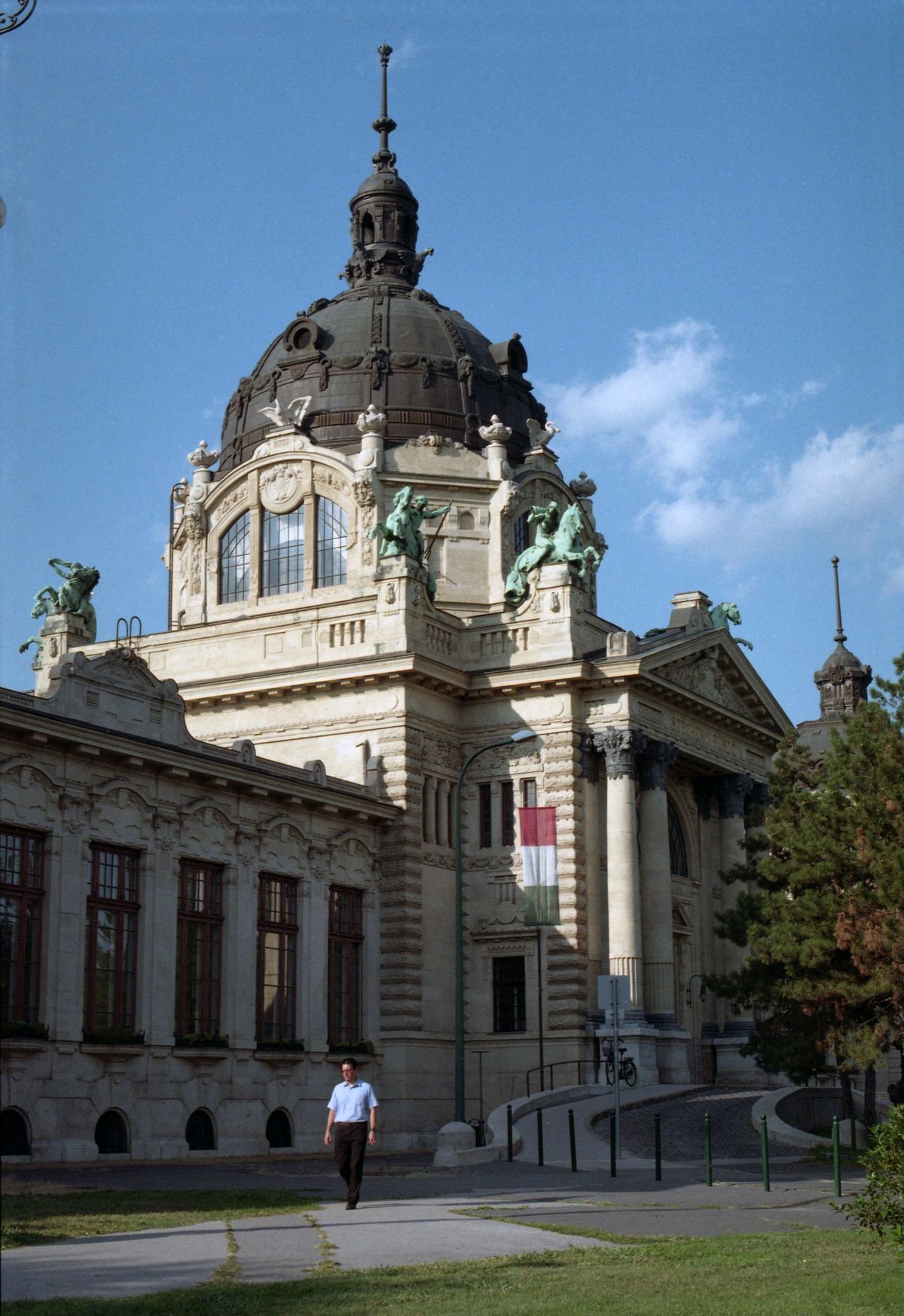
Budapest sits on thermal springs, and the domed Széchenyi Baths in City Park, with outdoor pools that steam even in winter, are the most famous. They are also the priciest: expect roughly 9,900–11,500 HUF (about €27–32) on weekdays with a locker, and more at weekends. If you want the experience for less, Lukács Baths cost around 4,900–5,500 HUF on weekdays and the small, local Dandár Baths around 3,500–4,500 HUF. Many baths offer reduced rates for EU seniors, so ask at the desk. The park itself is free to wander.
The Cheapest Sightseeing Ride in Town
Before you book a river cruise, try tram 2. It runs along the Pest embankment past the Parliament toward the Great Market Hall, with Castle Hill filling the windows across the river. It costs the same as any city ride, and it lets travelers who tire easily see a lot while sitting down.
Where to Eat
Lángos at the Great Market Hall
The Great Market Hall at Fővám tér is free to enter. Head up to the gallery, where lunch counters serve lángos, a golden fried flatbread usually topped with sour cream and cheese, for about 1,600–2,000 HUF (€4.50–5.50). If you prefer a sit-down meal, a bowl of goulash soup at one of the gallery restaurants costs around 3,100 HUF (about €8.50). The hall opens 6:00–18:00 on weekdays and until 16:00 on Saturdays; Sunday hours are limited and many stalls stay shut, so check before you go. It closes on public holidays.
A Weekday Lunch Menu (Napi Menü)
The best budget habit in Budapest is the daily lunch menu. On weekdays, many simple restaurants offer a soup and a main course for about 2,000–3,000 HUF (€5.50–8), usually from around 11:00 until 14:00 or 15:00. Look for “napi menü” on chalkboards outside. Toldi konyhája in the Castle District is one of the cheapest at about 2,000 HUF, and Menza on Liszt Ferenc tér serves a set lunch for around 2,590 HUF.
Főzelék, the Comfort Food Locals Love
Főzelék is a thick, gentle vegetable stew made with peas, lentils, potatoes or squash. Mild and filling, it suits children well. At a no-frills spot like Mini Ételbár, a bowl costs around 1,100 HUF (about €3), with a topping of meatloaf, stew or a fried egg for another 250–400 HUF.
A Few Practical Notes
- Getting around: a single ticket costs 500 HUF (about €1.40), a 90-minute ticket with transfers 850 HUF, a 24-hour pass 2,750 HUF and a 72-hour pass 5,750 HUF. You can tap a bank card at the validators on all four metro lines.
- Free travel: children under six ride free, and EU citizens aged 65 and over travel free with an ID showing their date of birth. Visitors from outside the EU pay the normal fare.
- From the airport: the 100E Airport Express bus costs 2,500 HUF (about €7) and needs its own ticket, which passes and free-travel rules do not cover.
- Easy on the legs: Buda is hilly and Pest is flat. Plan your walking days in Pest and use bus 16 or a tram for the climbs.
Budapest rewards a slow visit: a morning on Castle Hill, a hearty lunch, a warm soak and the Parliament glowing over the river at night. It feels grand without demanding a grand budget.